

1. Japanese spider crab
The Japanese spider crab is one gangly deep-sea creature. Known for having the largest leg span of any crustacean—up to 12 feet from claw to claw—this crab looks like an oversized spider. Despite its large size, the Japanese spider crab is not a ferocious predator. Instead, it uses its long, spindly limbs to slowly stroll across the seafloor as it scavenges for dead and decaying matter. Another fun fact—young Japanese spider crabs sometimes adorn themselves with sponges or kelp, possibly to camouflage themselves from predators.
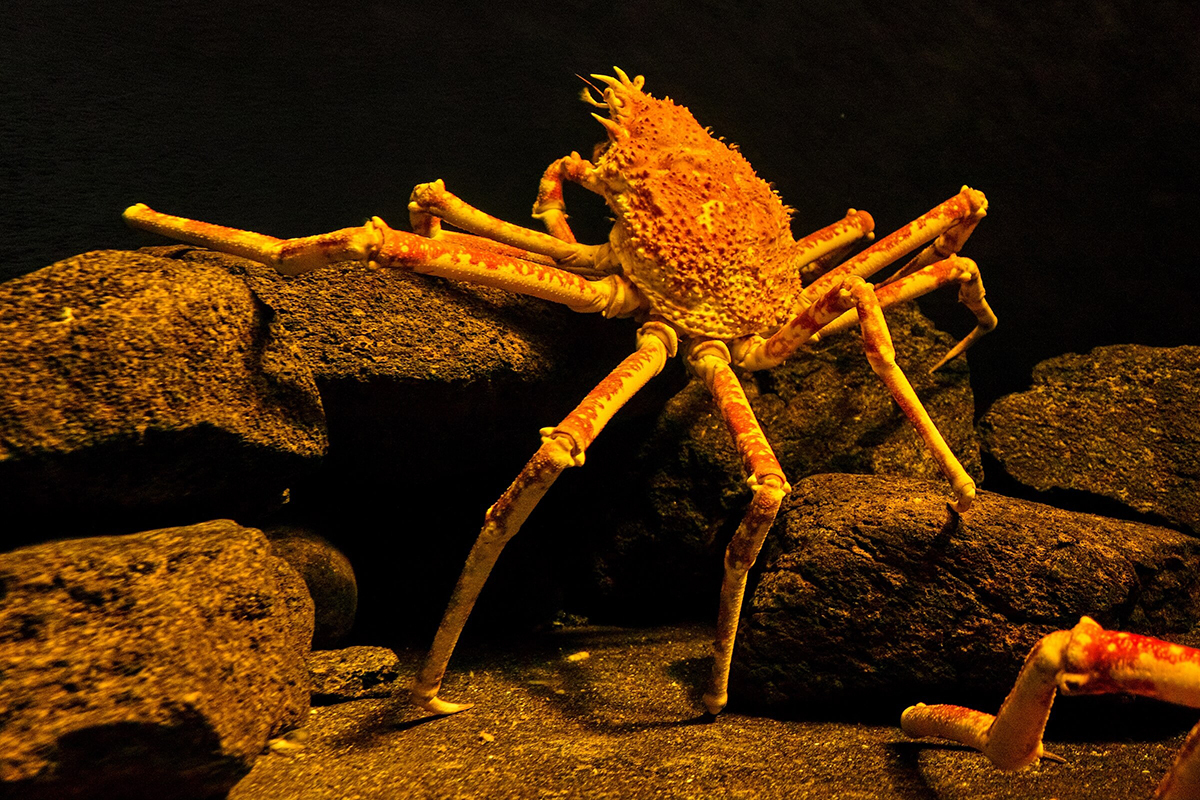
Japanese spider crab
© Hagane Tsuyoshi
2. Flapjack octopus
The flapjack octopus is undeniably cute. Its large eyes, stumpy webbed arms, and ear-like fins on its mantle make this octopus adorable. The flapjack octopus spends most of its time on the seafloor, where it can lay flat and resemble a pancake—hence its name. When it's time to move, the flapjack octopus swims or hovers above the seafloor by flapping its fins and pulsing its web of arms, making it look more like a pulsating jelly than an octopus. Unlike many shallow-water octopus species, the flapjack octopus lacks an ink sac and can’t change color to camouflage.
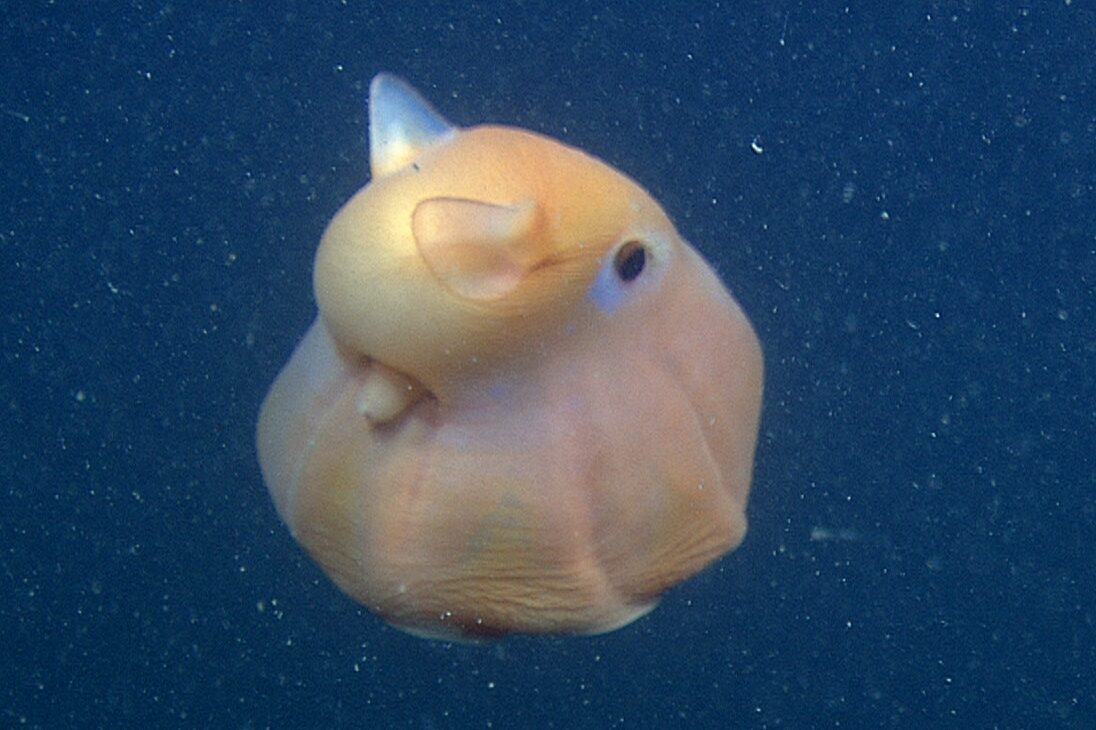
Flapjack octopus
© MBARI
3. Sea pig
The sea pig may get its name from its pink-colored body and love of the muddy seafloor, but it's actually a type of sea cucumber. The odd-looking, but surprisingly adorable, creature has tube feet on its underbelly, back, and surrounding its mouth. The sea pig spends its days snuffling through the muddy sediments on the seafloor, eating bits of dead algae and animals that have fallen from the surface. When something big, like a whale fall, sinks to the seafloor, huge herds of sea pigs gather nearby to feast on the rich organic sediments from the decaying carcass.
Sea pigs might be deep-sea babysitters. Our research partners at the Monterey Bay Aquarium Research Institute (MBARI) frequently see juvenile lithodid crabs (Neolithodes diomedeae) climbing on or hiding under sea pigs—possibly as a way for the young crabs to protect themselves from predators.
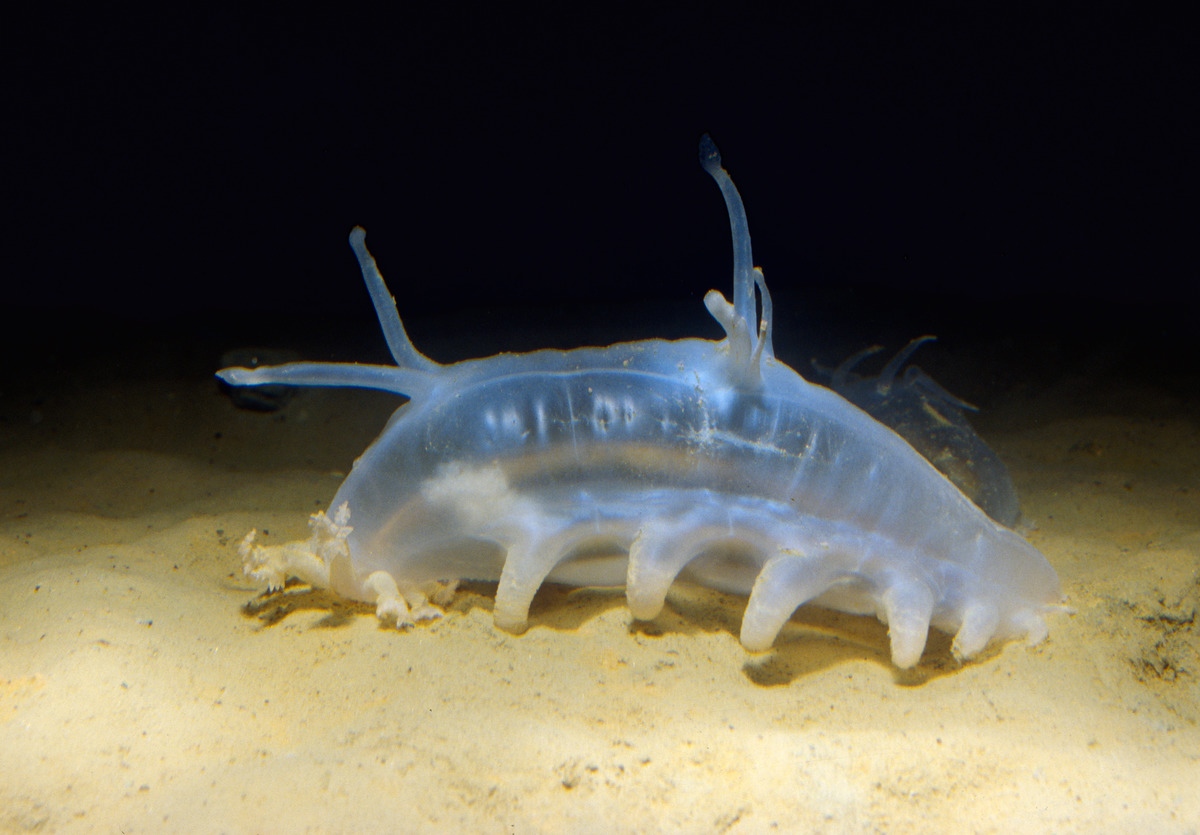
Sea pig
4. Giant isopod
These roly poly deep-sea creatures resemble their distant relatives, the tiny pill bugs found in many gardens. One difference between the giant isopod and your garden variety pill bug is its size—giant isopods can grow up to 16 inches in size! This colossal crustacean slowly roams the seafloor, feeding on dead animals. It is found in deep cold waters and can withstand depths of over 7,000 feet!
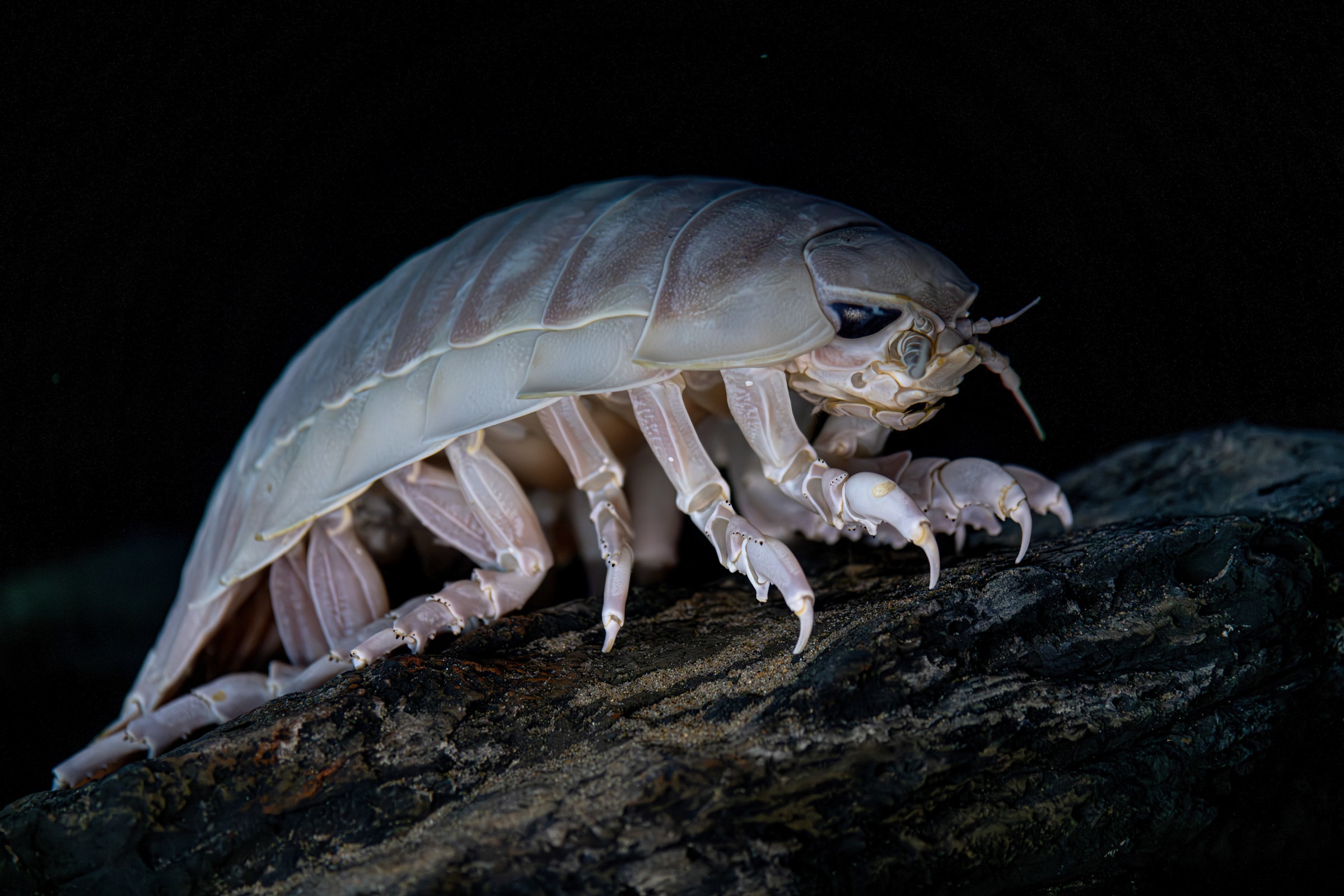
Giant isopod
5. Sea angel
Sea angels are small, swimming sea slugs whose transparent bodies and graceful flapping wings make them look more celestial than slug-like. These cold water inhabitants of the deep sea are modified gastropods—the muscular foot common in gastropods (snails and slugs) has evolved into wing-like appendages for strong swimming in open water and their shells have been lost.
Don’t let their angelic appearance fool you—sea angels use their radula and tentacles to pull other swimming snails from their shells and devour them. They prey exclusively on Clione limacina, a species of shelled pteropods which are expected to be negatively impacted by climate change and ocean acidification.
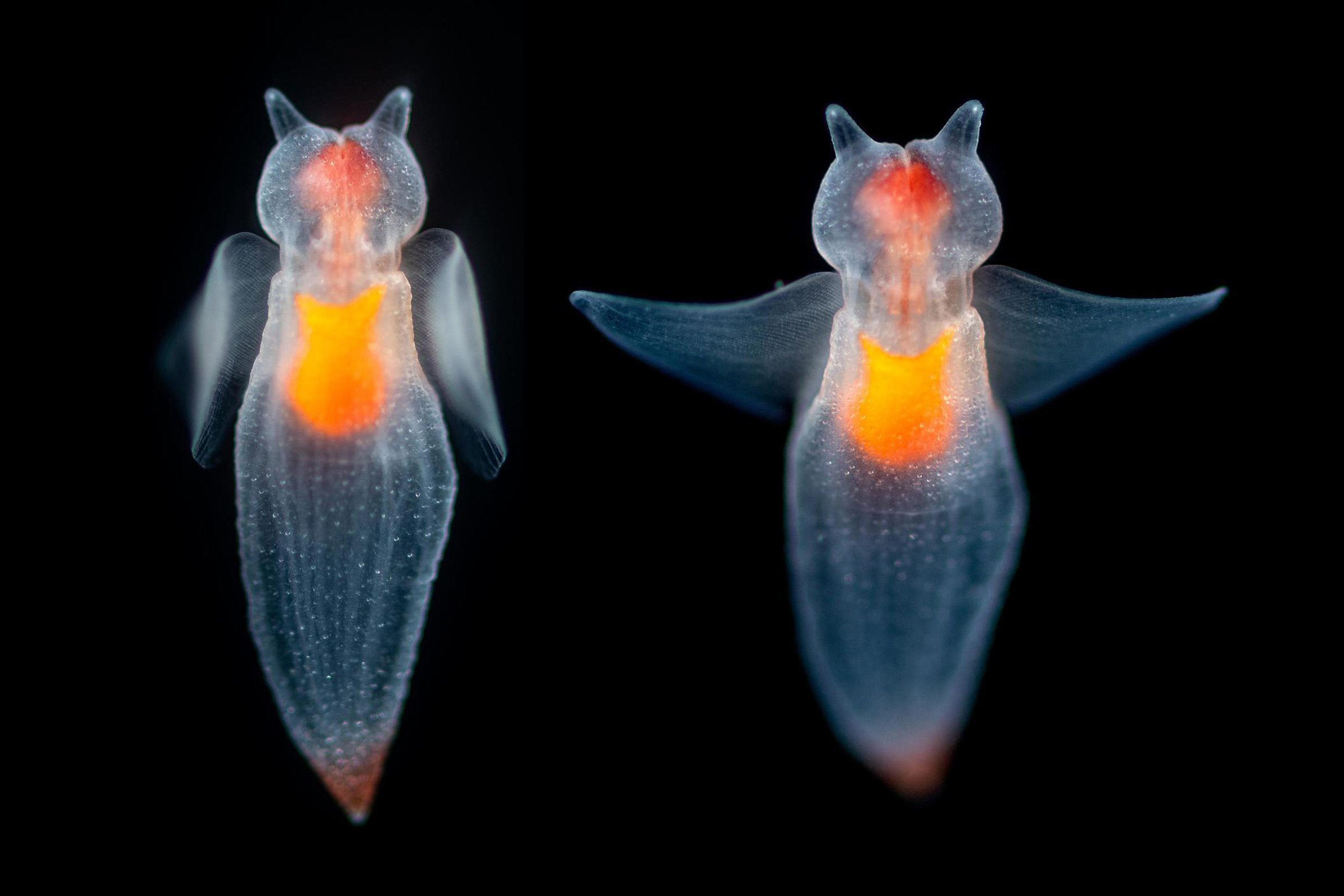
Sea angels
6. Giant larvacean
Despite its name, a giant larvacean is less than 10 centimeters (four inches) long. But this small, free swimming invertebrate is an incredible mucus architect. Giant larvaceans create an elaborate structure from slimy mucus that can be up to three feet across—its very own snot palace. The larvacean uses the structure to catch food in the marine snow drifting down from the waters above. If the mucus filter becomes clogged, the giant larvacean can quickly ditch it and build a new one. The abandoned mucus house sinks to the seafloor where it provides important food and nutrients to other animals in the deep sea. Watch as we dive inside the snot palaces of giant larvaceans with MBARI scientist Kakani Katija.
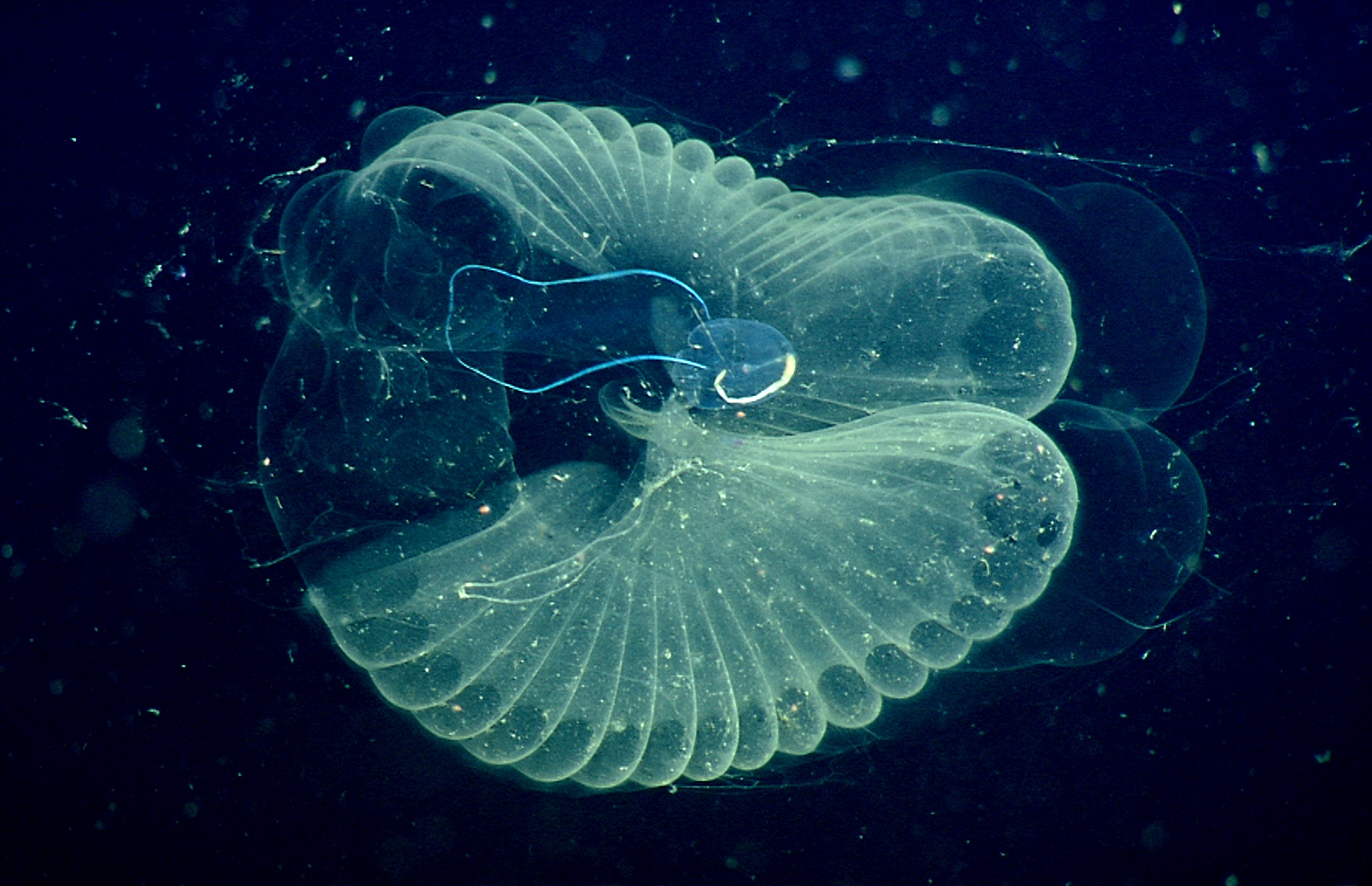
Giant larvacean
7. Bloody-belly comb jelly
The bloody-belly comb jelly’s name may be macabre, but the animal is breathtakingly beautiful. Shaped like a heart and colored a deep crimson, the bloody-belly comb jelly is covered in tiny cilia that beat continuously, propelling the jelly through the water. When light hits the cilia, it refracts, creating a sparkling display. Ironically, at the depths where this jelly lives, its red color makes it nearly invisible to predators. Red light disappears in this jelly’s dark, deep-sea habitat, and biologists believe its colorful red gut helps hide bioluminescent prey that, if still glowing, could make the jelly into a meal as well.
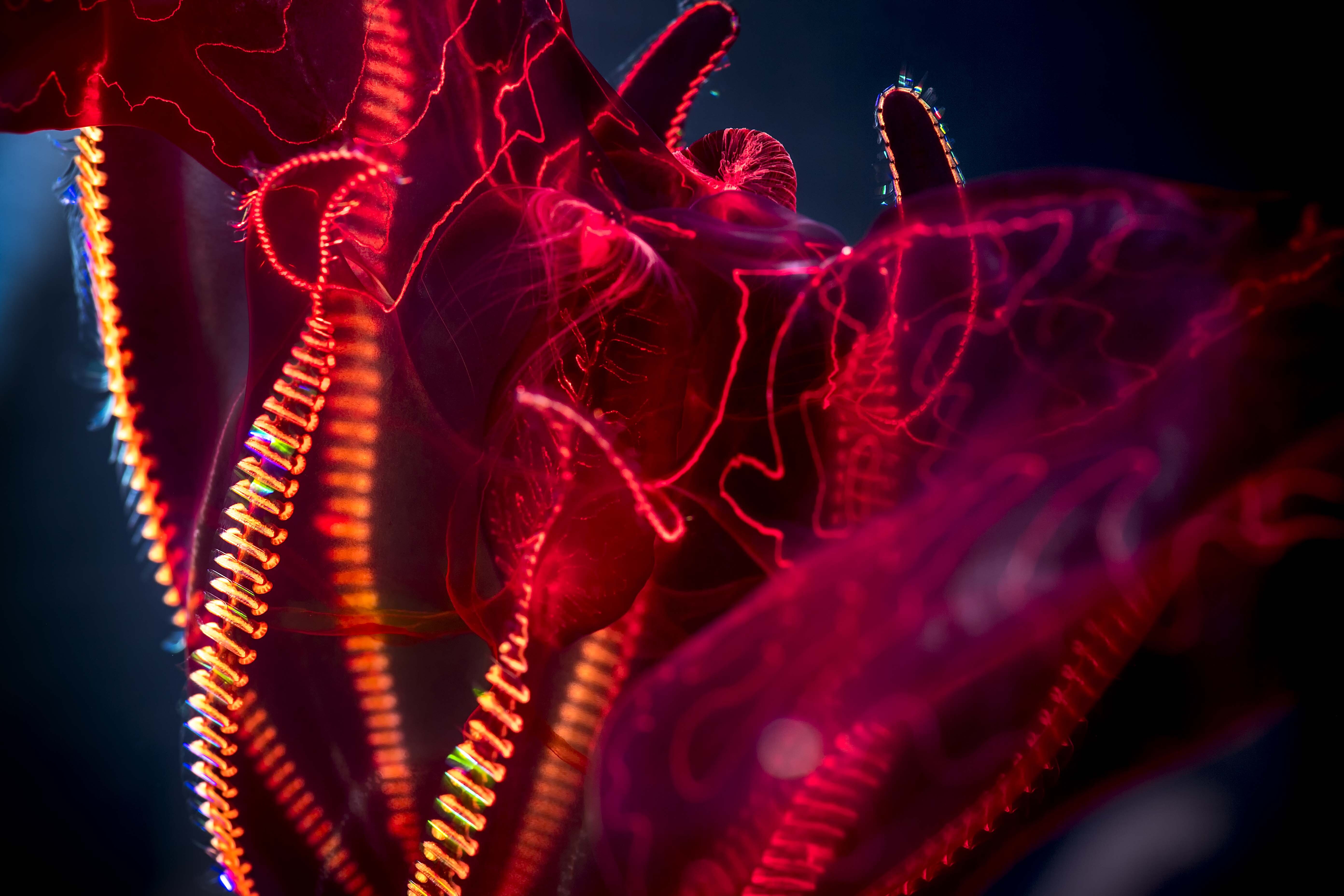
Bloody-belly comb jelly
8. Anglerfish
Anglerfish are aptly named as they are fish that fish for their prey. These ferocious-looking deep-sea fish have a rod-like appendage growing from their snout with a small organ at the tip containing millions of light-producing bacteria. This fishing rod casts a glowing blob of light right above the anglerfish’s mouth—a perfect lure to attract curious prey. Then the anglerfish just sits and waits for an unsuspecting fish to swim by. There are few prey items in the deep sea, so this fishing strategy may help anglerfish conserve energy while hunting for their next snack.
Want another mind-blowing fact about these toothy fish? In some species, a tiny, parasitic male will latch onto the much larger female with his teeth until he is effectively absorbed into her—their skin and vessels join together and many of his organs disintegrate. The male begins to get all the nutrients he needs from her blood. Soon, the female is able to use (what little remains of) her mate to reproduce and spawn her eggs.
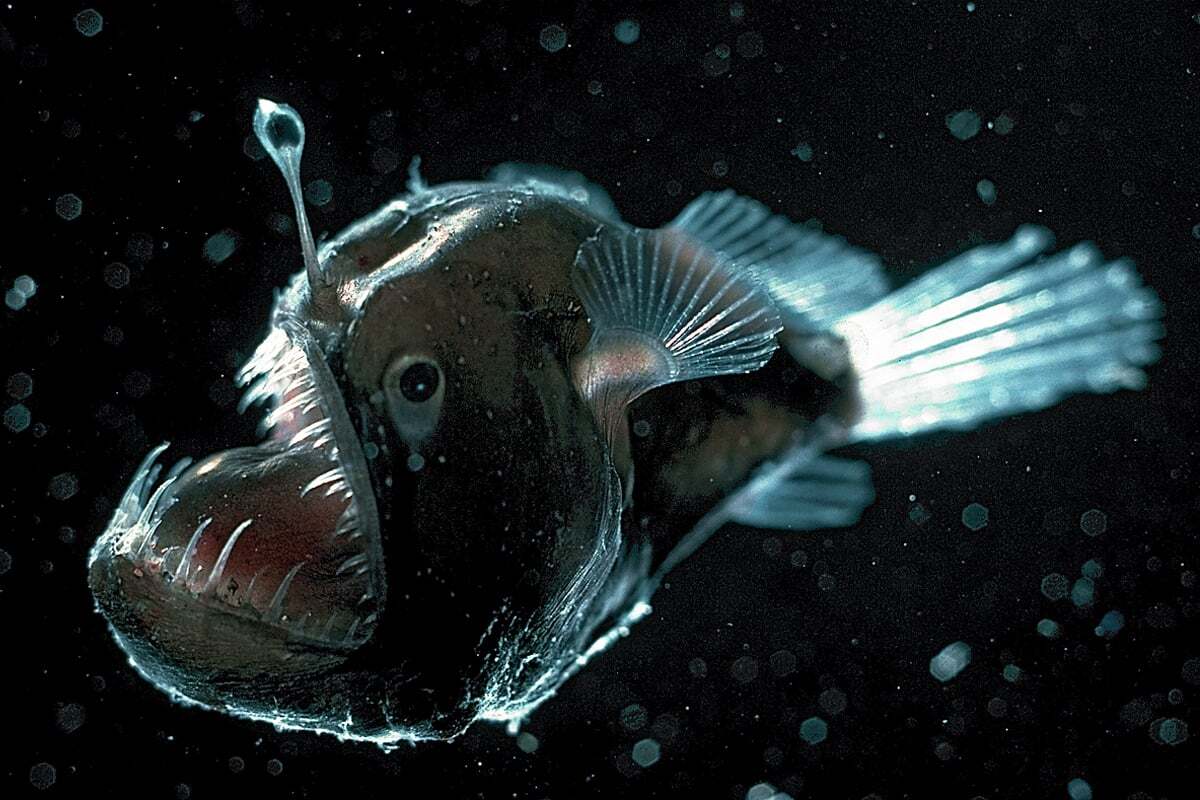
Anglerfish
© MBARI
9. Giant siphonophore
The giant siphonophore looks more like silly string than an animal—its long rope-like form floating through the deep ocean can stretch to be up to 130 feet long (40 m). The giant siphonophore, like all siphonophores, is a collection of highly specialized working parts. Some parts catch prey, others digest food, some parts reproduce, and others direct the action by swimming. This siphonophore is bioluminescent—it creates its own light. When it bumps against something, its stem glows with a bright blue light.
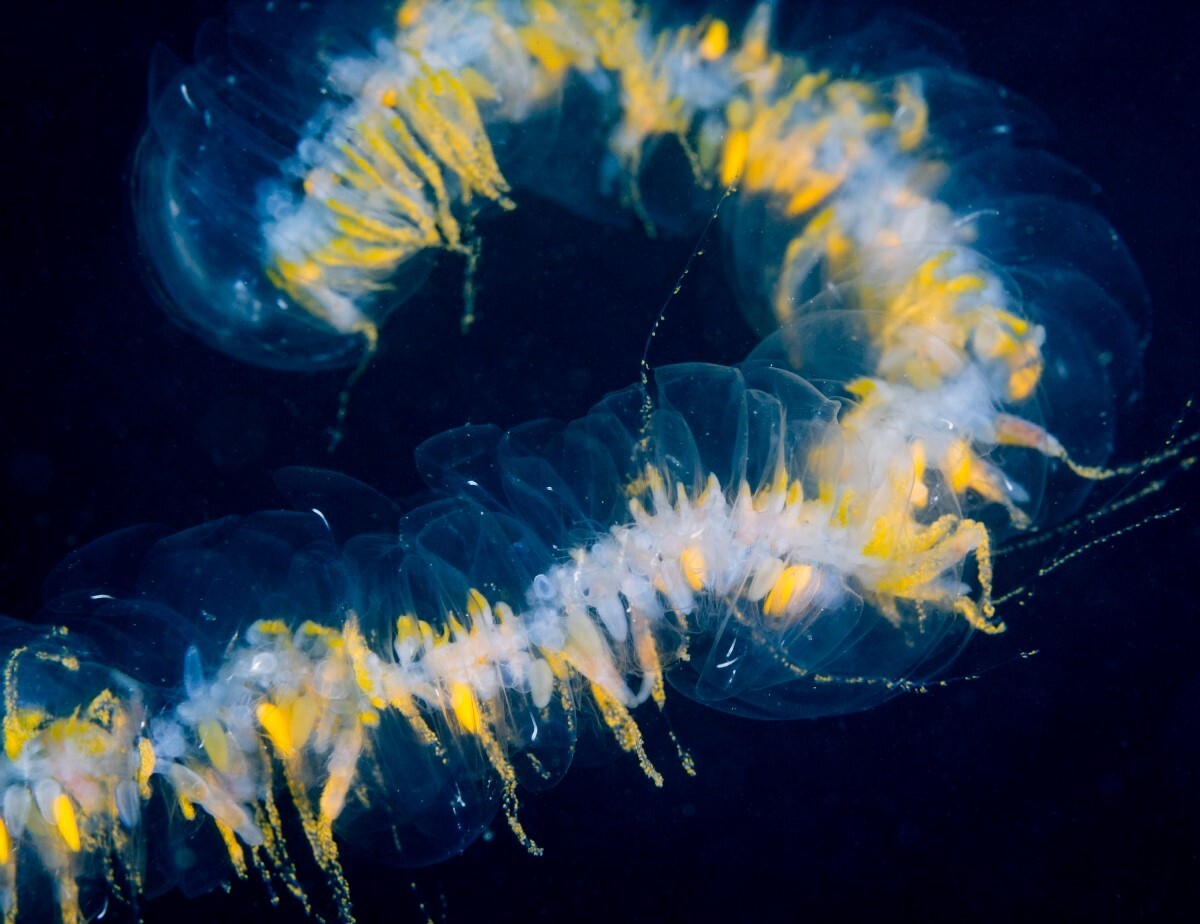
Giant siphonophore
Related videos
More fascinating deep sea animals

Watch as MBARI scientists unveil their ten favorite deep sea animals.
Keep exploring
Story
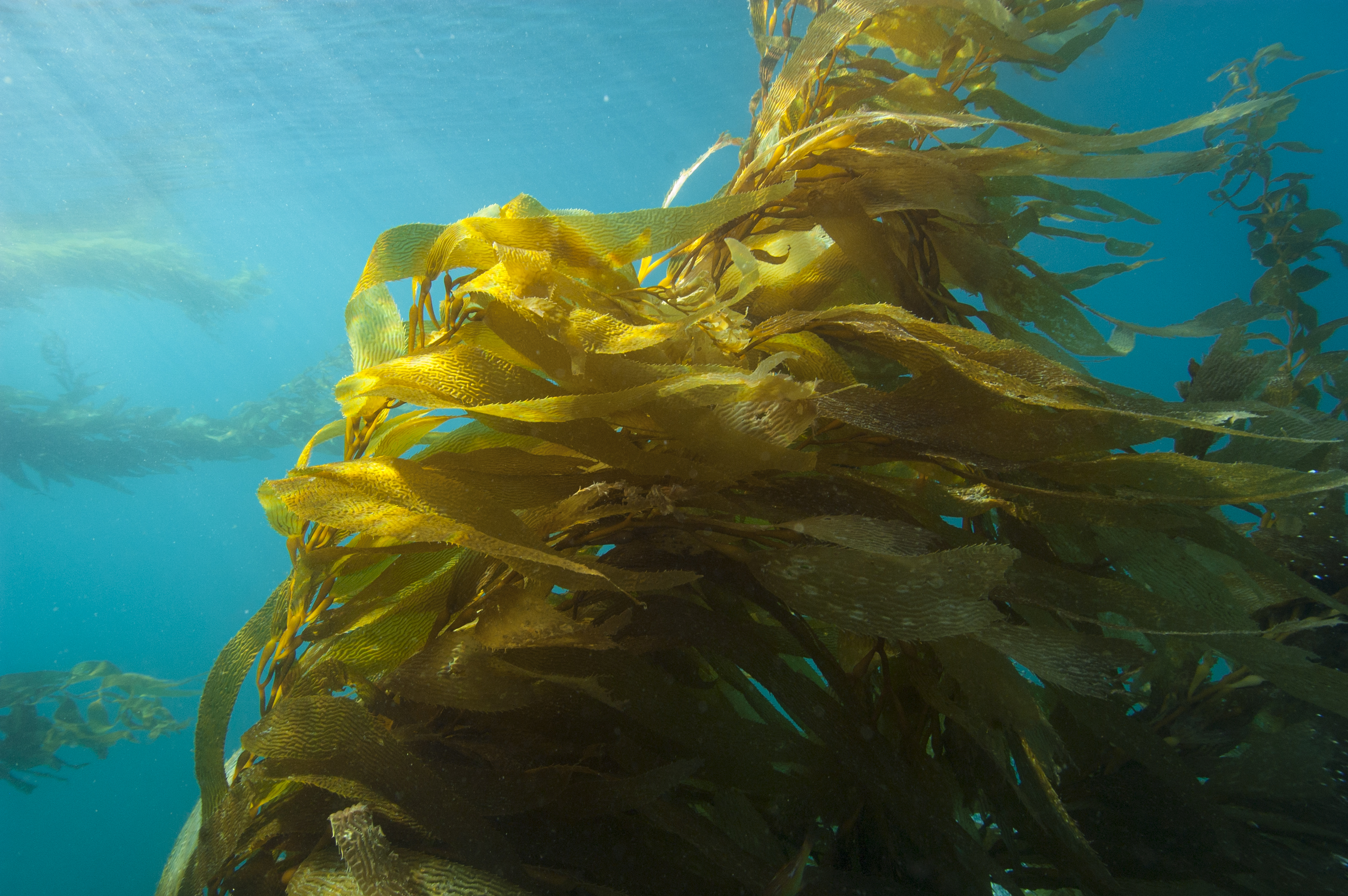
Chumash Heritage National Marine Sanctuary is almost here
Chumash Heritage National Marine Sanctuary protects marine life and cultural resources on California’s coast.
Read story – Chumash Heritage National Marine Sanctuary is almost here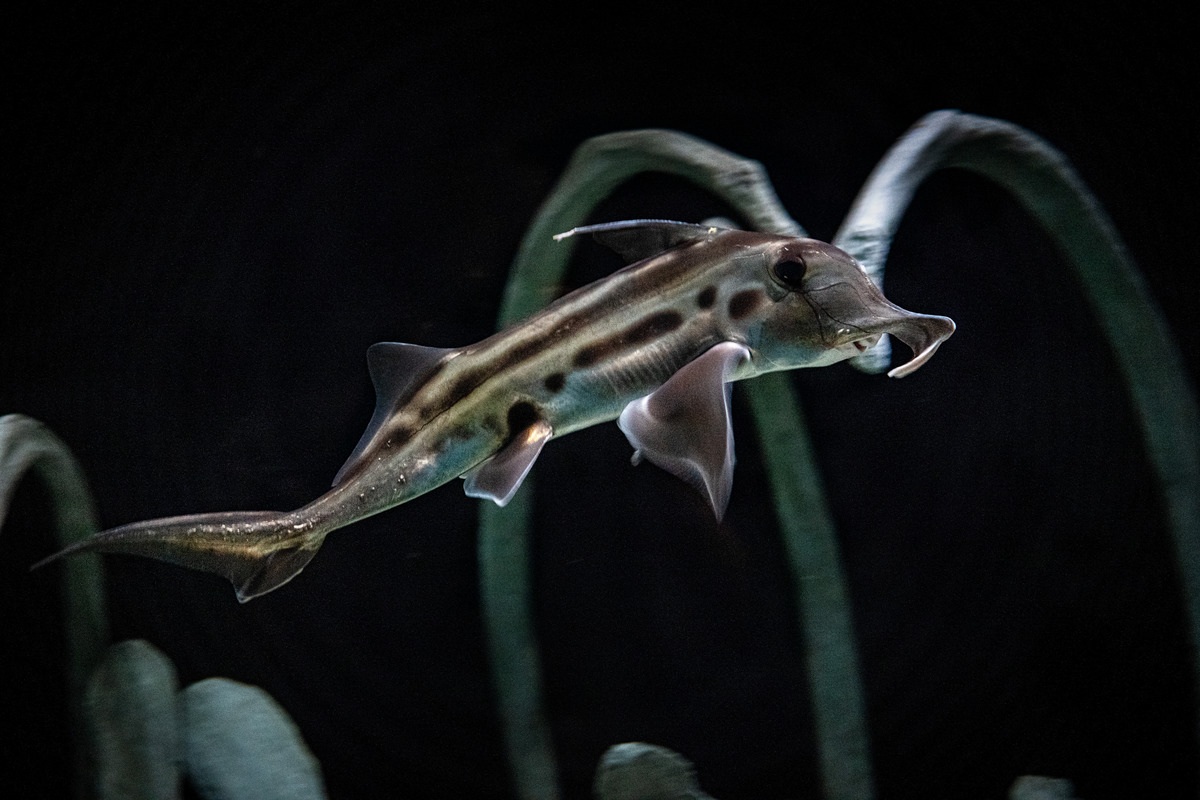
Story
The elephant (fish) in the room
Elephant fish are extraordinary animals both in the deep sea and at Monterey Bay Aquarium.
Read story – The elephant (fish) in the room
Story
Into the FathomVerse
FathomVerse is a new mobile game where players use real research images to help improve AI.
Read story – Into the FathomVerse